World War I Europe:
The Home Front
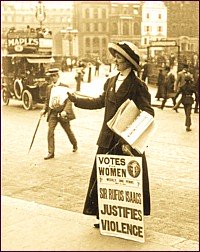
The years at the beginning of the twentieth century were years of great cultural shifts in Europe, as women and the lower classes began pushing for a more equal voice in society. The war did nothing to slow these changes, and probably accelerated them as women coped at home while their husbands and sons fought the war, as doctors and nurses struggled to save soldiers suffering from horrendous battlefield wounds or tried to stem the ravages of the 1918 Spanish flu epidemic. Prejudices against people who were different, foreigners or homosexuals, came into the open. And the mysteriously beautiful dancer Mata Hari was accused of being a German spy.
This page also includes a novel set in Iceland during this time period, although Iceland remained neutral in World War I.
This list is limited to true historical novels written by authors born after the end of World War I. A large number of contemporary novels were written during or after the war by authors drawing on their personal wartime experiences; those are not listed here.
Jump to:
Novels of the WWI Home Front in Europe
Mysteries
Novels of the WWI Home Front in Europe
Click on the title for more information from Powell's Books or another online source, or if you're outside the U.S., try The Book Depository.
Robert Bartram, Dance the Moon Down (2011), about a woman who struggles to survive after her poet husband volunteers to serve in the military during World War I and goes missing; self-published.
Stewart Binns, The Shadow of War (2014), about five British communities on the eve of the First World War, from June to December, 1914; #1 in the Great War series.
Stewart Binns, The Darkness and the Thunder (2015), about the disastrous Gallipoli campaign; #2 in the Great War series.
Christopher Bland, Ashes In The Wind (2014), a family saga about two boys in County Kerry, one Irish and one Anglo-Irish, whose friendship is shattered by the Irish War of Independence.
Clare Clark, We That Are Left (2015), about two wealthy British sisters and the family friend whose life becomes entwined with theirs when he reappears during the First World War.
Andrew Cowan, Worthless Men (2013), about a small English town during World War I, where cattle breeding and a barbed wire plant are among the mainstays of the local economy. Review at The Guardian
Louis de Bernières, The Dust That Falls From Dreams (2015), about three English families and their experiences during the First World War.
Robert Dinsdale, The Harrowing (2009), about a young man in working class Leeds whose parents force him to take his brother's place as a soldier in World War I after he seriously injures his brother.
Helen Dunmore, Zennor in Darkness (1993), about D.H. Lawrence and his German-born wife and their Cornish neighbors’ suspicion of them during the war years.
Robert Edric, In Desolate Heaven (1997), about a woman in 1919 Switzerland who meets two ex-officers who served in World War I and are trying to escape their memories.
Robert Edric, Field Service (2015), about a military officer serving in the War Graves Commission, charged with identifying and burying the dead of World War I.
Ben Elton, Time and Time Again (2015), about a former British soldier in the near future who travels back in time to June 1914 with the mission of preventing WWI.
Mackenzie Ford, Gifts of War (2008, titled The Kissing Gates in the U.K.), about a British soldier who, during the 1914 Christmas Truce, promises to find a German soldier's English girlfriend and let her know he's thinking of her, but then falls in love with her himself. Review
Emma Fraser, When The Dawn Breaks (2013), about two young women who volunteer as nurses during World War I.
Esther Freud, Mr. Mac and Me (2015), about a thirteen-year-old boy in a Suffolk fishing village and his friendship with a Scotch artist the villagers grow suspicious of as WWI looms.
Mary Gibson, Custard Tarts and Broken Hearts (2014), about a group of girls working in a Bermondsey custard factory during World War I.
Robert Goddard, In Pale Battalions (1988), about an aristocratic British family in the years after World War I.
Rosie Goodwin, Dilly’s Lass (2015), about a woman who reunites with the daughter she gave up years ago as a baby.
Philippa Gregory, Fallen Skies (1993), about a British officer and the woman he marries in the war's aftermath.
Jessica Gregson, The Angel Makers (2011), about the women in a remote Hungarian village whose lives improve when their men go away to war, and who resort to extreme measures to preserve their freedom after the war ends.
Rosie Harris, Whispers of Love (2010), about a woman who gives her baby up for adoption after her fiancé is killed at sea in 1914, and then regrets her decision.
Sarah Harrison, The Flowers of the Field (1980), about three young London women of very different backgrounds and their experiences during World War I.
Sarah Harrison, A Flower That's Free (1984), about a young woman who returns to London on the eve of World War II after spending most of her life in France and Kenya; sequel to The Flowers of the Field.
Sarah Harrison, The Wildflower Path (2013), about the younger generations of the family in A Flower That's Free.
Cynthia Harrod-Eagles, The White Road (2005), about the fictional Morland family at the outbreak of World War I; #28 in the Morland Dynasty series, which begins in medieval England.
Cynthia Harrod-Eagles, The Burning Roses (2006), about a British family in 1915 as the First World War continues with the men overseas and the women at home; #29 in the Morland Dynasty series.
Cynthia Harrod-Eagles, The Measure of Days (2007), about a British family in 1917 as five of the family's men fight in the horrific Battle of the Somme; #30 in the Morland Dynasty series.
Cynthia Harrod-Eagles, The Foreign Field (2009), about a British family in 1916 as the war continues and one of the family's women goes to France as a nurse; #31 in the Morland Dynasty series.
Cynthia Harrod-Eagles, The Fallen Kings (2009), about a British family in 1918 as many of the family face danger during the final year of the war; #32 in the Morland Dynasty series.
Cynthia Harrod-Eagles, Goodbye, Piccadilly (2014), about an aristocratic English family and their servants in 1914 as World War I begins; #1 in the War at Home series.
Cynthia Harrod-Eagles, Keep The Home Fires Burning (2015), about an aristocratic English family and their servants in 1915 during the early years of World War I; #2 in the War at Home series.
Audrey Howard, Whispers On The Water (2002), historical romance about a young British woman in love with a man whose spirit is broken in the Great War.
Audrey Howard, As The Night Ends (2005), historical romance about a British suffragette in love with a surgeon and separated from him, first by a quarrel and then by war.
Audrey Howard, All the Dear Faces (1992), historical romance about two young women, one from a large Irish family and the other from an aristocratic family in Liverpool during the years before and during the First World War.
Meg Hutchinson, Friendship’s Bond (2011), about an orphaned young woman evicted by her guardian after she rejects his advances, and accused of living in sin with the Russian boy she promised her father she would protect.
Reina James, This Time of Dying (2006), about an undertaker who struggles to persuade authorities to close ports and institute quarantines as the 1918 Spanish flu epidemic begins to claim huge numbers of victims. Review from the London Independent
Susan Lanigan, White Feathers (2014), about an Irish girl in London whose boyfriend opposes war on principle and refuses to enlist when World War I breaks out.
Maureen Lee, Martha's Journey (2010), about a mother horrified to learn her fourteen-year-old son has joined the army in exchange for a shilling, who decides to walk from Liverpool to London to bring the government's attention to the exploitation of underage boys as soldiers.
Pierre Lemaitre, The Great Swindle (2015), about two witnesses to a murder at the end of World War I, and their struggles to survive in France after the war is over; winner of the Prix Goncourt.
Judith Lennox, One Last Dance (2014), a family saga about a young woman who during World War I falls in love with the man who loves her sister and, when he returns from the war to discover her sister has married someone else, hopes to win him, unaware of some tragic family secrets that will only be uncovered decades later.
Rosella Leslie, The Federov Legacy (2013), about a young Russian immigrant in British Columbia's Cariboo region, trained as a nurse, whose father sends her back to Russia in the summer of 1914 to assist with a new hospital.
Elizabeth Lord, All That We Are (2010), about a husband and wife in London's East End whose happy family life is disrupted when one daughter steals the other daughter's fiancé.
Henning Mankell, Depths (2006), about a Swedish submarine captain’s affair with a woman on an isolated island.
Dermot McEvoy, The 13th Apostle (2014), about Michael Collins and the struggle for Irish independence that began with the 1916 Easter Rising.
Rosemary McLoughlin, Tyringham Park (2013), a family saga about the disappearance of a toddler from a grand Irish estate in 1917 which exposes long-hidden deceits among the aristocratic family and their servants.
Kristina McMorris, The Edge of Lost (2015), about an Irish boy who immigrates to the U.S. in 1919 and stays with an Italian family while searching for his father, and about an Alcatraz prison guard's missing daughter in 1937.
James Meek, The People’s Act of Love (2005), set in Siberia during the end of World War I.
Deborah Moggach, In the Dark (2007), about the war's effect on the lives of ordinary Londoners.
Andrea Molesini, Not All Bastards Are From Vienna (2015; also titled Between Enemies), about a seventeen-year-old orphan living with a family in a small Italian village north of Vienna, whose villa is requisitioned by Austrian troops in 1917.
Alan Monaghan, The Soldier’s Song (2010), about a working class Irishman who volunteers to fight in World War I in 1914 and returns in 1916 to find his brother fighting for Irish independence from England; #1 in the Stephen Ryan trilogy.
Alan Monaghan, The Soldier’s Return (2011), about an Irish soldier who returns from fighting in World War I to find conflict raging at home as Sinn Fein fights for Irish independence; #2 in the Stephen Ryan trilogy. Review at the Independent
Alan Monaghan, The Soldier’s Farewell (2012), about an Irish World War I veteran who goes to London in 1921 to negotiate on behalf of Irish separatists while his brother remains in jail for IRA activities; #3 in the Stephen Ryan trilogy.
Michelle Moran, Mata Hari's Last Dance (2016), about the exotic dancer and WWI spy Mata Hari.
Pamela Oldfield, Loving and Losing (2009), about an English woman waiting for her scientist husband to return from the U.S. during the 1918 influenza epidemic.
Michelle Paver, The Serpent’s Tooth (2005), about a woman living with a tragic secret and her search for emotional peace during World War I.
Piers Paul Read, Alice in Exile (2001), about a free-thinking daughter of a radical publisher, rejected by her aristocratic lover when she becomes pregnant, who accepts a position as governess to a Russian family during the years of World War I and the Russian Revolution.
Phillip Rock, The Passing Bells (1979), about changes in the British class structure during the World War I years.
Phillip Rock, Circles Of Time (1982), about an aristocratic British family during the years after World War I; sequel to The Passing Bells.
Phillip Rock, A Future Arrived (1985), about an aristocratic British family during the World War II years; sequel to The Passing Bells and Circles of Time.
David Semmel, 11th of Av (2010), about a Jewish community in a small Galician town, which becomes scattered during World War I; self-published.
Susan Sherman, The Little Russian (2012), about a Ukrainian Jewish woman accustomed to a life of luxury in Moscow who, when she makes the foolish choice to stay in the Ukraine as World War I breaks out, must learn to survive in harsh conditions.
Jody Shields, The Crimson Portrait (2006), about doctors and nurses caring for men whose faces were destroyed in the war.
Sjón, Moonstone: The Boy Who Never Was (2016), about a gay man in Reykjavik in 1918.
Richard Skinner, The Red Dancer: The Life and Times of Mata Hari (2001), about the Dutch woman who reinvented herself as an exotic dancer in Paris and was believed to be a spy for the Germans during World War I.
Wilbur Smith, The Burning Shore (1985), about a Frenchwoman’s struggles during World War I and her effort to make a new life for herself in South Africa.
Nick Stafford, Armistice (2009), about a young woman who discovers her fiancé was shot and killed just minutes after the Armistice was declared and sets out to learn the truth behind his death. Review at The Guardian
Mary Jane Staples, Love For a Soldier (2012), about a young German woman torn between loyalty to her country and her feelings for a British pilot.
Barbara Stark-Nemon, Even in Darkness (2015), about a woman from a wealthy German-Jewish family and her struggle to survive through two world wars and their aftermath.
Penny Vincenzi, No Angel (2000), a love story set in London and New York during the First World War.
Kate Walbert, A Short History of Women (2009), a literary novel in the form of linked short stories about the daughter of a woman who starved herself to death for women's suffrage, and her descendants to the present day.
Giles Waterfield, The Iron Necklace (2015), about a German architect and a woman from a wealthy English family who marry and settle in Germany shortly before World War I breaks out.
Heather Webb, editor, with Hazel Gaynor, Beatriz Williams, Jennifer Robson, Jessica Brockmole, Kate Kerrigan, Evangeline Holland, Lauren Willig, and Marci Jefferson, Fall of Poppies (2016), a collection of short stories about love during the Great War.
Kate Williams, The Storms of War (2014), about a German immigrant in England, his aristocratic English wife and their four children on the eve of the First World War; #1 in the De Witt Family trilogy.
Kate Williams, The Edge of the Fall (2015), about a family struggling to resume normal life after World War I; #2 in the De Witt Family trilogy.
Kate Williams, The House of Shadows (2018), about a half-English, half-German heiress who goes to New York in 1929 to save the family firm, and also to search for the son she believed was dead; #3 in the De Witt Family trilogy.
Lauren Willig, The Ashford Affair (2013), about a woman lawyer in Manhattan who, at her grandmother's 99th birthday party in 1999, learns of long-hidden family secrets about her grandmother's life in London during World War I.
Louisa Young, My Dear I Wanted to Tell You (2011), about two English couples, one aristocratic, the other of differing class backgrounds, and their experiences as the husbands and wives are separated by World War I and one of the husbands later returns, horrifically injured.
Louisa Young, The Heroes' Welcome (2015), about two young couples in 1919 whose marriages are troubled after the husbands return from fighting in World War I; sequel to My Dear I Wanted To Tell You
Mysteries
Click on the title for more information from Powell's Books or another online source, or if you're outside the U.S., try The Book Depository.
Edward Marston, A Bespoke Murder (2011), about two police detectives in a force depleted by the outbreak of the Great War who must investigate the murder of a German immigrant; #1 in the Home Front mystery series.
Edward Marston, Instrument of Slaughter (2012), about two police detectives who must investigate the murder of a a young conscientious objector; #2 in the Home Front mystery series.
Edward Marston, Five Dead Canaries (2013), about two police detectives who must investigate the deaths of five canaries - female munition workers whose job makes their skin go yellow - in a bomb blast; #3 in the Home Front mystery series.
Edward Marston, Deeds of Darkness (2014), about two police detectives who investigate the murder of a woman who was strangled in a cinema while watching a Charlie Chaplin film; #4 in the Home Front Detective mystery series.
Edward Marston, Dance of Death (2015), about two police detectives investigate the murder of a man stabbed to death during a zeppelin attack; #5 in the Home Front Detective mystery series.
Edward Marston, The Enemy Within (2016), about two police detectives trying to track down an escaped arson convict, at the same time they pursue a murder investigation; #6 in the Home Front Detective mystery series.
Edward Marston, Under Attack (2017), about two police detectives who investigate the murder of a man whose body was found in the Thames in June 1917 as German bombers attack London; #7 in the Home Front Detective mystery series.
Top of page
Back to 20th Century Directory
Back to WWI America: Warfare
Forward to WWI America: Home Front
Enjoy this page? Please pay it forward. Here's how...
Would you prefer to share this page with others by linking to it?
- Click on the HTML link code below.
- Copy and paste it, adding a note of your own, into your blog, a Web page, forums, a blog comment, your Facebook account, or anywhere that someone would find this page valuable.