Medieval Anglo-Saxons and Continental Europeans
Historical Novels Set Between A.D. 500 - 1066
Most novels set in the sixth through eleventh centuries are set either in medieval Anglo-Saxon England or in Celtic parts of the British Isles. A few which are set in Continental Europe about a variety of subjects are listed at the end of this page.
Jump to:
6th-9th Century Anglo-Saxon England, Before Alfred the Great
Alfred the Great
10th-11th Century Anglo-Saxon England, After Alfred the Great
6th-11th Century European Continent
Mysteries
The roots of Anglo-Saxon England lie in the fifth century. No longer under Roman protection, the Britons invited groups of Saxons to settle on the eastern coast and defend the land from invaders. The migration continued, and the Saxons multiplied and came to occupy most of the east and central part of Britain south of Scotland. One of the earliest Saxon kings in Britain whose name we know was Cerdic, who founded the Kingdom of Wessex in the sixth century.
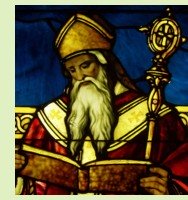
In 597, St. Augustine landed in Kent to convert the Saxons to Christianity. His rapid success did not hold and required fortifying over the following decades, but a monastery founded on the Isle of Lindisfarne in 635 helped establish Anglo-Saxon England as a Christian country. In 793, Vikings attacked Lindisfarne, beginning a wave of terrifying raids culminating in 866 with the capture of what is now York by Danish Vikings who settled there and began expanding their territory.
King Alfred the Great, one of Cerdic's successors, defended Wessex from the Danes, establishing a boundary between the Danish north and the Saxon south. Several nineteenth century authors wrote romanticized adventure novels set during the time of Alfred the Great; modern authors from Alfred Duggan on have based their work on more solid historical research.
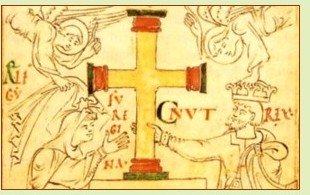 Alfred's children unified England in the tenth century. His daughter Aethelfled ruled as the powerful "Lady of the Mercians." During the early eleventh century, England had several Danish kings. Cnut (or Canute) is the best known. Saxon rule was briefly restored with Edward the Confessor, who died in 1066. The throne was then disputed among Harold Godwineson, Harald Hardrada and Duke William of Normandy, precipitating the Norman Conquest.
More about the medieval Anglo-Saxons at Wikipedia
6th-9th Century Anglo-Saxon England,
Before Alfred the Great
Click on the title for more information from Powell's Books or another online source, or if you're outside the U.S., try The Book Depository.
Edoardo Albert, Edwin, High King of Britain (2014), about Edwin of Northumbria, who seeks refuge with Raedwald of East Anglia after being deposed, where he meets a Christian missionary who predicts he will become King of Britain; #1 in a planned series.
Richard Blake, Conspiracies of Rome (2008), about a handsome young Saxon who unwittingly becomes involved in a heretical plot amid the turmoil of seventh century Rome; #1 in the Aelric series.
Richard Blake, The Terror of Constantinople (2009), about a young Anglo-Saxon clerk from Britain used as a pawn by Emperor Phocas as enemy armies near Constantinople in 610 AD; #2 in the Aelric series.
Richard Blake, The Blood of Alexandria (2010), about an Anglo-Saxon clerk for the Roman Emperor Heraclius who is sent on a mission to Alexandria where he must contend with unrest in the streets and the threat of a Persian invasion; #3 in the Aelric series.
Richard Blake, The Sword of Damascus (2011), about an Anglo-Saxon clerk sent to Damascus as the victorious Muslim caliphate threatens to move beyond Arabia to Constantinople; #4 in the Aelric series.
Marissa Campbell, Avelynn (2016), about a ninth-century Saxon woman who is a secret pagan and falls in love with a Viking on the eve of the Viking invasion of England.
Richard Denning, The Amber Treasure (2009), about an Anglo-Saxon boy who must rescue his kidnapped sister and an heirloom sword stolen in a time of war; self-published.
Jill Dalladay, The Abbess of Whitby (2016), about the seventh-century Saxon woman Hild, who converted to Christianity and became the Abbess of Whitby.
Alfred Duggan, Conscience of the King (1951), about Cerdic, the Saxon founder of Wessex (519-534).
Barbara Erskine, River of Destiny (2012), a supernatural story about a present-day couple who move into an old house and become entangled with the lives of a Victorian-era blacksmith and an Anglo-Saxon smith who lived in 865.
Parke Godwin, The Tower of Beowulf (1995), historical fantasy based on the Old English epic poem Beowulf.
Nicola Griffith, Hild (2013), about the early life of Hild, who would found Whitby Abbey, in the court of King Edwin of Northumbria during the transition from paganism to Christianity. Review
Matthew Harffy, The Serpent Sword (2016), about a seventh-century warrior who joins his brother in fighting for King Edwin of Northumbria; #1 in the Bernicia Chronicles series.
Matthew Harffy, The Cross and the Curse (2016), about a seventh-century Northumbrian warrior rewarded with weath and land after a victory in war, only to find his estate threatened by enemies and treachery; #2 in the Bernicia Chronicles series.
Matthew Harffy, Blood and Blade (2016), about a seventh-century Northumbrian warrior who must escort his king's new bride to her new home amid a Pictish uprising; #3 in the Bernicia Chronicles series.
Matthew Harffy, Killer of Kings (2017), about a seventh-century Northumbrian warrior who must defer his desire for revenge on his enemies when he is sent on a mission that places him in the midst of an attack by Penda of Mercia; #4 in the Bernicia Chronicles series.
Kathleen Herbert, Queen of the Lightning (1984), historical romance set in seventh-century Britain about a princess of Cumbria who must marry a prince of Northumbria rather than the man she loves; #1 in the Northumbrian trilogy.
Kathleen Herbert, Ghost in the Sunlight (1986), historical romance about a princess of Mercia and the prince who is her father's enemy; #2 in the Northumbrian trilogy.
Kathleen Herbert, Bride of the Spear (1988; also titled Lady of the Fountain), historical romance about a princess of Lothian and a prince of Cumbria during the sixth century turmoil in northern Britain after the passing of Arthur; #3 in the Northumbrian trilogy.
Margaret James, Elegy for a Queen (2003), about a modern woman wounded by tragedy who discovers ancient documents in a cathedral library that introduce her to the ghost of an eighth century Anglo-Saxon queen, and lead to her slipping back into a past century.
Carla Nayland, Paths of Exile (2009), about a fugitive king in seventh-century Northumbria. Review or Author Interview
Fay Sampson, The Land of Angels (2006), about Princess Bertha of Paris and St. Augustine's sixth-century mission to covert the people of Kent in southeastern England to Christianity.
Fay Sampson, Flight of the Sparrow (1999), about the seventh-century King Edwin of Northumbria, who converted to Christianity in 627.
Brian Sellars, The Whispering Bell (2009), about a seventh century Anglo-Saxon woman and her struggle for justice in a male-dominated world.
Victoria Whitworth, Daughter of the Wolf (2016), about a young woman left in charge of her father's fort, located on a strategically important coastal estuary in ninth-century Northumbria.
Alfred the Great
Click on the title for more information from Powell's Books or another online source, or if you're outside the U.S., try The Book Depository.
Doris Sutcliffe Adams, The Price of Blood (1962), about a Danish Viking shipwrecked on the Devon coast during the time of King Alfred, who is torn between loyalty to his people and his attraction to the Christian faith.
Victor Canning, Raven's Wind (1983), about a young Anglo-Saxon man who escapes from Viking captivity. Review
Bernard Cornwell, The Last Kingdom (2004), about a dispossessed Saxon lord raised by Vikings who joins King Alfred's army in the hope of winning back his lands; #1 in the Saxon Tales series. Review
Bernard Cornwell, The Pale Horseman (2005), about a dispossessed Saxon lord raised by Vikings who loses King Alfred's favor shortly before the Danes invade; #2 in the Saxon Tales series. Review
Bernard Cornwell, The Lords of the North (2006), about a dispossessed Saxon lord raised by Vikings who returns to Northumbria to try to regain the lands his uncle usurped from him; #3 in the Saxon Tales series. Review
Bernard Cornwell, Sword Song (2007), about a Saxon raised by Vikings who fights in King Alfred's army during an attempt to regain London from the Danes; #4 in the Saxon Tales series. Review
Bernard Cornwell, The Burning Land (2009), about a Saxon raised by Vikings who serves in King Alfred's army as the Danes make another attempt at conquest and Alfred's health begins to fail; #5 in the Saxon Tales series. Review
Bernard Cornwell, Death of Kings (2012), about a Saxon raised by Vikings who vows to serve the ailing King Alfred but questions whether to abandon Alfred's heir so he can reclaim his own ancestral lands; #6 in the Saxon Tales series. Review
Bernard Cornwell, The Pagan Lord (2013), about a Saxon raised by Vikings who after the death of Alfred the Great leads a band of men north in an attempt to recapture his family fortress; #7 in the Saxon Tales series. Review
Bernard Cornwell, The Empty Throne (2014), about a warrior who supports the late king's widow, Aethelfled, to succeed him, amid a time of renewed Viking attacks on England; #8 in the Saxon Tales series. Review
Bernard Cornwell, Warriors of the Storm (2016), about a warrior in Anglo-Saxon Mercia whose allegiance is tested; #9 in the Saxon Tales series. Review
Bernard Cornwell, The Flame Bearer (2016), about an aging Anglo-Saxon warrior who finally has the opportunity to retake the fortress and lands his treacherous uncle stole from him many years before; #10 in the Saxon Tales series.
Bernard Cornwell, War of the Wolf (2018), about an aging Anglo-Saxon warrior who must fend off a Norseman attacking Northumbria with the goal of becoming its king; #11 in the Saxon Tales series.
Alfred Duggan, The King of Athelney (1961; also titled The Right Line of Cerdic), about King Alfred the Great. Review
G.A. Henty, The Dragon and the Raven, or The Days of King Alfred (1886), about a young Saxon thane who joins King Alfred's army.
Herbert Inman, Wulnoth the Wanderer (1908), about a Viking thrall who becomes a friend of King Alfred the Great.
Charles W. Whistler, King Alfred's Viking: A Story of the First English Fleet (1899), about a Viking who witnesses Alfred's rise to become King of Wessex
Joan Wolf, The Edge of Light (1990), about Alfred the Great, his wife Elswyth, and the English resistance to the Danish invasion.
10th-11th Century Anglo-Saxon England,
After Alfred the Great
Click on the title for more information from Powell's Books or another online source, or if you're outside the U.S., try The Book Depository.
Valerie Anand, The Proud Villeins, about an eleventh century Norman knight forced into serfdom in Saxon England, and his descendants into the early thirteenth century; #1 in the Bridges Over Time series, which continues past the medieval period. Review
Valerie Anand, The Ruthless Yeomen, a saga about a family of serfs set in thirteenth century England; #2 in the Bridges Over Time series, which continues past the medieval period.
Valerie Anand, The Women of Ashdon, a saga about a family of English serfs; #3 in the Bridges Over Time series, which continues past the medieval period.
Valerie Anand, The Faithful Lovers, a saga about a family descended from English serfs; #4 in the Bridges Over Time series, which continues past the medieval period.
Valerie Anand, The Cherished Wives, a saga about a family descended from English serfs; #5 in the Bridges Over Time series, which continues past the medieval period.
Valerie Anand, The Dowerless Sisters, a saga about a family descended from English serfs; #6 in the Bridges Over Time series, which continues past the medieval period.
Patricia Bracewell, Shadow on the Crown (2013), about Emma of Normandy, who at age fifteen married the much-older King Aethelred of England.
Patricia Bracewell, The Price of Blood (2015), about Emma of Normandy, the wife of King Aethelred, in 1006 as she struggles to protect her infant son from rivals for the throne; #2 in the Emma of Normandy trilogy.
Edward Bulwer-Lytton, Harold, Last of the Saxon Kings (1848), about King Harold, who lost his throne to the Normans in 1066.
Joanna Courtney, The Chosen Queen (2015), about Edyth of Mercia, the wife of Harold Godwinson, in 1066 as the Norman Conquest looms; #1 in the Queens of the Conquest trilogy.
Joanna Courtney, The Constant Queen (2016), about Elizaveta Princess of Kiev and Harald Hardrada as the Vikings move to invade England in 1066; #2 in the Queens of Conquest series.
H.A. Douglas, The Ship-Master (2007), about a Viking Age ship which sets out for a summer of trading and encounters a host of difficulties; self-published.
H.A. Douglas, The Ship-Wives (2008), about a Viking woman who must manage her homestead, defend it, and decide whether to accept a marriage offer for her young daughter while her husband is away at sea; sequel to The Ship-Master; self-published.
Alfred Duggan, The Cunning of the Dove (1960), about King Edward the Confessor, who ruled from 1042-1066.
Haley Elizabeth Garwood, Swords Across the Thames (1999), about Aethelflaed, the warrior queen who ruled Mercia in the tenth century.
Justin Hill, Shieldwall (2011), about a young man who survives the Viking raids of 1016 to fight in King Ethelred's army during the years before the Norman Invasion in 1066; #1 in a planned series. Review
Helen Hollick, The Forever Queen (2011; originally published in 2004 as A Hollow Crown ), about Emma, the wife of the eleventh-century King Aethelred of England. Review
Penny Ingham, Lady of the Mercians, about the daughter of King Alfred the Great, who became a powerful ruler during an age of warfare; self-published.
Sheelagh Kelly, Jorvik: A Tale of the Last Viking (1992), about a man from the eleventh century Viking city of Jorvik, now modern-day York, England, and his quest for vengeance against King Ethelred.
Ottilie A. Liljencrantz, The Ward of King Canute: A Romance of the Danish Conquest (1902), about King Canute and his wife Elfgiva.
Eliza Redgold, Naked: A Novel of Lady Godiva (2015), about the Saxon woman who, according to legend, rode naked through the town of Coventry to persuade her husband to revoke a severe tax on the townfolk.
Anya Seton, Avalon (1956), about tenth-century England during the Viking invasions.
Christopher Spellman, Blood Oath (2010), about two brothers whose loyalty to each other is tested during the tenth-century reign of Aethelstan of Wessex; self-published; #1 in the series The Raven and the Wolf.
Christopher Spellman, Land of Ire (2011), about two brothers caught up in a blood feud; self-published; #2 in the series The Raven and the Wolf.
6th-11th Century European Continent
Click on the title for more information from Powell's Books or another online source, or if you're outside the U.S., try The Book Depository.
Irene Brand, Like a Burning Fire (1996), about a man whose search for a family memento of Christ's resurrection takes him to the court of Charlemagne; Christian message; #2 in the Legacies of Faith series.
Michael Chabon, Gentlemen of the Road (2007), an adventure story about the Khazars, in which a pair of Jewish horse thieves become involved in a tenth century rebellion in the Caucasus. Review
David Churchill, The Leopards of Normandy: Devil (2015), about Robert, Duke of Normandy, who fathered an illegitimate son who would become William the Conqueror; #1 in a series.
Donna Cross, Pope Joan (1996), based on the legend of the German woman who may have become a pope in the ninth century. Review and Author Interview
Louis deMartelly, Charles Martel and the Lance of Destiny (2008), about Charles Martel, the ancestor of Charlemagne; self-published.
George Finkel, The Long Pilgrimage (1967), about an orphaned boy of Norse birth from Northumbria who joins Charlemagne's army after being exiled in 778.
John Richard Gabourel, The Knight and the Serpent (2011), about a knight of eleventh-century Normandy who covets the wife of his lord, a childhood friend; self-published.
Cecelia Holland, The Angel and the Sword (2000), about a ninth-century Spanish princess who flees her father's court disguised as a man and fights in the army of Charles the Bald against Viking invaders. Review
Diana M. Johnson, Destiny's Godchild: A Novel of Intrigue and Enchantment in Frankish Gaul (1998), about a young magician in the eighth century who becomes involved with Prince Dagobert, the heir to the Frankish throne, and his tutor Pepin the Vain; #1 in the Charlemagne series.
Diana M. Johnson, Pepin's Bastard: The Story of Charles Martel (1999), about Charles Martel, the grandfather of Charlemagne; #2 in the Charlemagne series.
Diana M. Johnson, Quest for the Crown: The Story of Pepin the Short (2002), about Pepin the Short, Charlemagne's father; #3 in the Charlemagne series.
Eyvind Johnson, The Days of His Grace
(1960), about a family of minor nobility in what is now northern Italy during the time of Charlemagne's conquests there.
Robert Lyndon, Hawk Quest (2012), about an eleventh-century Frankish outlaw who takes on a commission to ransom a Norman knight captured by the Seljuk Turks. Review
Robert Lyndon, Imperial Fire (2014), about a Byzantine mercenary sent to China on a search for gunpowder; sequel to Hawk Quest.
Allan Massie, Charlemagne and Roland (2007), the story of Charlemagne, as narrated by the tutor of the young Holy Roman Emperor Frederick II; #3 in the Dark Age trilogy.
Naomi Mitchison, The Oath-Takers (1991), about a young Frank who travels to Spain in the unsettled years after the death of Charlemagne.
Catherine Munroe, The King's Nun: A Novel of King Charlemagne (2007), about an eighth century nun who becomes a trusted advisor of Charlemagne.
Julia O'Faolain, Women in the Wall (1975), about Radegund, one of the six wives of the Frankish King Clothair I.
Mirella Patzer, Heinrich the Fowler: Father of the Ottonian Empire (2005), about the tenth century struggles of Duke Heinrich of Saxony and his wife Matilda to achieve their ambitions; self-published.
Iain Pears, The Dream of Scipio (2002), a literary novel about the persecution of Jews, set in Provence, France, during the fifth, fourteenth and twentieth centuries.
Bernard Reilly, Treasure of the Vanquished: A Novel of Visigothic Spain (1993), about Pelayo (Pelagius), a Gothic nobleman of the eighth century, and his efforts to reconquer southern Spain from the Moors.
Bernard Reilly, Secret Of Santiago (1997), about a man and his faith in Spain in 830 A.D. when the Shrine of Santiago de Compostela was founded.
Kim Rendfeld, The Cross and the Dragon (2012), about a woman who give her husband a charmed dragon amulet in the hope of protecting him when he fights in Charlemagne's army against invaders from Spain in 778.
Kim Rendfeld, The Ashes of Heaven's Pillar (2014), about a widow whose family sells her and her children into slavery in eighth-century Francia.
Tim Severin, The Book of Dreams (2012), about the future Emperor Charlemagne's first campaign against the Moors of Spain from the perspective of an exiled Saxon who joins Charlemagne's army; based on the medieval "Song of Roland;" #1 in the Saxon series.
Tim Severin, The Emperor's Elephant (2013), about a man who goes on a mission for Charlemagne to find rare animals and bring them to Haroun al-Rashid, the Caliph of Baghdad; #2 in the Saxon series. Review
Tim Severin, Saxon: The Pope’s Assassin (2015), about a Saxon prince sent to Rome by King Carolus (Charlemagne) to find out who attacked Pope Leo; #3 in the Saxon series.
Warren A. Silver, The Green Rose (1977), about the eleventh-century Spanish Jewish mystic and poet Solomon ibn Gabirol.
Henry Treece, The Green Man (1966), a retelling of the earliest version of the Hamlet story, set in sixth century Denmark. Review
Abraham B. Yehoshua, A Journey to the End of the Millennium: A Novel of the Middle Ages (1999), about a Jewish merchant from North Africa who travels to Paris with his squabbling family on the eve of the first millenium.
Frank Yerby, An Odor of Sanctity (1965), about Emir al-Rahman II in ninth century Moorish Spain and a Christian Goth who becomes an instrument of the defeat of Islam in Spain.
Mysteries
Click on the title for more information from Powell's Books or another online source, or if you're outside the U.S., try The Book Depository.
Charles Barnitz, The Frith Seat (2012), a mystery about a man in Eoforwic (York England) in 783 who claims sanctuary after being accused of a series of murders and is commanded to find the real killer; self-published.
Stephen Gaspar, To Know Evil (2009), a mystery set in northern Italy on the eve of the second millenium about a monk whose abbot forbids him to investigate the suspicious death of a fellow monk, which may be connected with a gnostic text hidden in the abbey library.
V.M. Whitworth, The Bone Thief (2012), about a young cleric who serves as secretary to King Edward's sister, the queen of Mercia, who sends him to find Saint Oswold's bones; #1 in the Wulfgar mystery series.
V.M. Whitworth, The Traitors' Pit (2013), about a young cleric whose elder brother is accused of plotting to overthrow King Edward; #2 in the Wulfgar mystery series.
Back to Top
Back to the Medieval Directory
Back to the Medieval Celts page
Forward to the Medieval Normans page
Enjoy this page? Please pay it forward. Here's how...
Would you prefer to share this page with others by linking to it?
- Click on the HTML link code below.
- Copy and paste it, adding a note of your own, into your blog, a Web page, forums, a blog comment, your Facebook account, or anywhere that someone would find this page valuable.