The Novels of
Lion Feuchtwanger
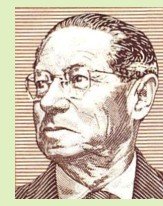
German writer Lion Feuchtwanger's first novel, The Ugly Duchess, a historical novel about a Tyrolese countess, appeared in the 1920s during the rise of Hitler's National Socialist movement. His second, Jew Süss, centered on a prominent eighteenth-century banker persecuted for being a Jew. Jew Süss infuriated the Nazis, perhaps all the more because it was acclaimed by critics in London and New York.
Feuchtwanger's next work, Success, a contemporary novel about the persecution of an art museum curator, further inflamed the Nazis. In 1933, while Feuchtwanger was on a lecture tour in the U.S., Hitler was appointed Chancellor. The German ambassador to the U.S. warned Feuchtwanger not to return to Germany, so he and his wife went to France. His years there were productive as he continued writing historical and contemporary novels that implicitly or explicitly condemned the Nazis, but the Vichy government soon posed a threat. In the summer of 1940, he was sent to a detention camp.
Mrs. Feuchtwanger pleaded with an American diplomat, Harry Bingham, to help get him released. Bingham defied his own government to spirit Feuchtwanger out of the camp and then, with the help of First Lady Eleanor Roosevelt, arranged visas allowing the Feuchtwangers to go to the U.S. After a harrowing escape across Spain and Portugal, they reached the U.S. and settled in California. The first novel Feuchtwanger wrote in his new country was a tribute to the American Revolution, Proud Destiny, about Benjamin Franklin's 1776 diplomatic mission to France.
Though Feuchtwanger's novels are out of print in the U.S. and U.K., they remain popular in Germany, where they are readily available in new editions.
For more about Feuchtwanger's escape from the Nazis, see Harold von Hofe's article "The Novelist Lion Feuchtwanger" at the University of Southern California's Feuchtwanger Memorial Library website and Peter Eisner's article "Saving the Jews of Nazi France" in the March 2009 issue of Smithsonian.
Lion Feuchtwanger's Historical Novels
(click on a title to link to its listing at an online bookstore):

The Ugly Duchess (1923), about Margarete Maultasch, the last countess of independent Tyrol in the fourteenth century. In German: Die Hässliche Herzogin.
Jew Süss (1925; also titled Power), based on the life of an eighteenth-century Jewish banker, Joseph Süss Oppenheimer, who served as a financial adviser to the Duke of Württemberg and was persecuted after the Duke's death. In German: Jud Süss.
The Josephus Trilogy:
In German: Josephus Trilogie

Josephus (1932), about the first-century Jewish historian Josephus during the years when he visits Rome, then witnesses the fall of Jerusalem in 70 A.D. See review. In German: Der Jüdische Krieg.
The Jew of Rome (1935), about the first-century Jewish historian Josephus after the fall of Jerusalem, as he rises to a position of status in Rome. In German: Die Söhne.
Josephus and the Emperor (1942), about the first-century Jewish historian Josephus and the deterioration of his relationship with the emperor Domitian as Domitian begins to persecute Jews. In German: Der Tag wird kommen.
The Pretender (1936), about Terentius Maximus, who resembled Nero and led a rebellion against the Roman Emperor Titus. In German: Der falsche Nero.
 Proud Destiny (1947), about Benjamin Franklin, sent to France in 1776 by the revolutionary government of what would become the United States, and his efforts to gain arms and aid from the French monarchy. In German: Die Füchse im Weinberg.
This Is the Hour (1951; also titled Goya), about the Spanish artist Francisco Goya and his transition from court painter for Charles IV to a painter with a political conscience who used his art to protest Spain's repressive policies. In German: Goya, oder der arge Weg der Erkenntnis.

'Tis Folly to Be Wise: Or, Death and Transfiguration of Jean Jacques Rousseau (1952), about a young French aristocrat whose father hosts the French philosopher Rousseau in 1778 at the end of Rousseau's life. In German: Narrenweisheit, oder Tod und Verklärung des Jean-Jacques Rousseau.
Raquel: The Jewess of Toledo (1956), about the twelfth-century Spanish King Alfonso VIII of Castile and his affair with a Jewish woman. In German: Die Jüdin von Toledo. Review at Reading the Past
Jephthah and his Daughter (1958; also titled Jephta and his Daughter), about the Biblical military commander who vows to sacrifice the first thing he sees on returning home if he defeats the enemy, only to be greeted by his daughter as he returns victorious. In German: Jefta und seine Tochter.
Lion Feuchtwanger's Contemporary Novels
and Memoirs
(click on a title to link to its listing at an online bookstore)
The Waiting Room Trilogy:
In German: Wartesaal Trilogie
 Success (1930), about the efforts of a young Bavarian woman to free her imprisoned lover, an art museum curator who has offended sensibilities by exhibiting vaguely disturbing paintings; set during the Weimar Republic years. In German: Erfolg.
The Oppermanns (1934), about a Jewish family during Hitler's rise to power. In German: Die Geschwister Oppermann.
Exile (1940), about a family of Jewish emigrants living in Paris after Hitler's rise to power; not readily available in English translation. In German: Exil.
The Devil in France (1941), a memoir of Feuchtwanger's life in Vichy France. In German: Der Teufel in Frankreich.
Double, Double, Toil and Trouble (1943; titled The Lautensack Brothers in the U.K.), about the Nazi movement from 1931 to 1934 along the border between Bavaria and Bohemia. In German: Die Brüder Lautensack.
Simone (1944), about a teenage girl's life as a refugee during World War II. In German: Simone.
Back to Top
Back to Directory of Articles
See this group of books at Amazon.com
Enjoy this page? Please pay it forward. Here's how...
Would you prefer to share this page with others by linking to it?
- Click on the HTML link code below.
- Copy and paste it, adding a note of your own, into your blog, a Web page, forums, a blog comment, your Facebook account, or anywhere that someone would find this page valuable.