|
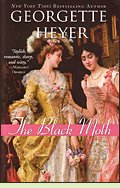
The Black Mothby Georgette HeyerReviewed by Margaret Donsbach
Seven years in the past, one of the Carstares brothers cheated at cards - a more unpardonable sin than rape (for the man, anyway) among the gambling-mad gentlefolk of Georgian England. Big brother took the blame for little brother who, in a fit of reckless idiocy, had succumbed to temptation. Big brother knew little brother desperately loved a girl who would not marry a man with a ruined reputation. To support himself following his rejection by polite society, big brother cloaks himself in a secret identity and becomes a highwayman. Girls, you can tell whether a man is a truly decent sort by the way he treats his horse. Everyone is in love with dashing Jack Carstares: his horse, his valet, his innkeeper - Lud! even some of the very victims he so charmingly robs. He's not a very good highwayman, since he can't bring himself to disoblige ladies or elderly men, but he has his fun, keeps enough of his ill-gotten gains to sustain himself, his valet and his horse in gentlemanly fashion (the valet is an essential, given Jack's endless supply of frothing lace jabots, gold-bedecked coats and apricot satin breeches), and plays Robin Hood with the rest of the money. Meanwhile, little brother Dick's villainous brother-in-law dresses in menacing shades of black and silver and lays plots to snare beautiful virgins, earning himself the title of "The Black Moth." Inevitably, the two clash over one very special young lady. Virtue wins in the end, after ample dollops of heartache and hair-raising danger. (1921; new Sourcebooks edition 2009) More about The Black Moth at Powell's Books or Amazon.com Interview with Mary Fahnestock-Thomas, editor of Georgette Heyer: A Critical Retrospective
These Old Shades (1926), a reworking of The Black Moth using the same characters in a new story. Devil's Cub (1932), a sequel to These Old Shades about the son of the reckless nobleman and his French wife. Review or More info at Powell's Books Regency Buck (1935), about two young women who, after their father's death, are chagrined to discover they have been made wards of a man not much older than they are. More info An Infamous Army (1937), about a beautiful young widow (Dominic's granddaughter) whose behavior leaves much to be desired amid the social whirl in Brussels as the Battle of Waterloo rages nearby; a sequel to Regency Buck and Devil's Cub that can be read as a stand-alone.
The History of Gambling in England by John Ashton (1899). More info Roll the Bones: The History of Gambling by David G. Schwartz (2006). More info Gambling's Strangest Moments by Graham Sharpe (2005). More info
Gambling in London's Most Ruinous Gentlemen's Clubs
Back to Novels of the Eighteenth Century
|